JAKARTA, KOMPAS - Indonesia is committed to continuing efforts to address plastic pollution, even though global negotiations in Geneva, Switzerland, last week reached an impasse. Nevertheless, the issue of plastic in Indonesia is considered difficult to resolve if the focus is solely on waste management downstream.
Minister of the Environment Hanif Faisol Nurofiq stated that Indonesia is committed to taking concrete actions at both the national and regional levels to address plastic pollution, as plastic has become a real problem for the environment and health.
"Indonesia's perspective, according to the Ministry of Environment and Forestry, regarding the deadlock in plastic negotiations is not the end. However, it unites efforts to strengthen coordination and prepare a more directed, inclusive, and implementable national strategy to address this issue," said Hanif during the National Plastic Action Partnership (NPAP) discussion in Jakarta, Thursday (21/8/2025).
As previously reported, negotiations on plastic in formulating a global Plastic Agreement did not reach a consensus. Several oil-producing countries such as Saudi Arabia, Iran, Russia, and the United States opposed the wishes of the majority of other countries that seek to limit the production and harmful chemicals in plastics.
:quality(75):watermark(https://cdn-content.kompas.id/umum/kompas_main_logo.png,-16p,-13p,0)/https://cdn-dam.kompas.id/images/2025/03/10/cba4ca6d0e1906bc42f6a882a98f56eb-DSC09638.JPG)
In these negotiations, Indonesia's position tended to be cautious and did not support production restrictions.
Nevertheless, according to Hanif, the production of harmful plastics that cannot be managed or contain hazardous additives should be phased out.
"However, the national action plan must be formulated in accordance with the context and capacities of each country, with a shared determination to reduce plastic pollution through strong implementation measures to address the potential for transboundary pollution and waste," he stated.
Indonesia's perspective, as presented by the Ministry of Environment and Forestry, regarding the deadlock in plastic negotiations, is not the end. Rather, it unites efforts to reinforce coordination and prepare a more directed, inclusive, and implementable national strategy to address this issue.
Hanif stated that Indonesia encourages bilateral cooperation to promote multilateral agreements. "Based on the experience of the climate regime, it is very difficult to reach multilateral agreements," he said.
Indonesia suggests that while a multilateral agreement is being formed, there is a need to strengthen bilateral agreements. Support from developed countries in technology, investment, and funding to address plastic pollution has become a necessity," he added.
According to Hanif, Indonesia has a responsibility as a country with a large population, which also contributes to plastic pollution in the environment.
On the other hand, plastic pollution, including microplastics, has become a real threat to environmental sustainability, public health, and even human survival. "This must be taken seriously," he stated.
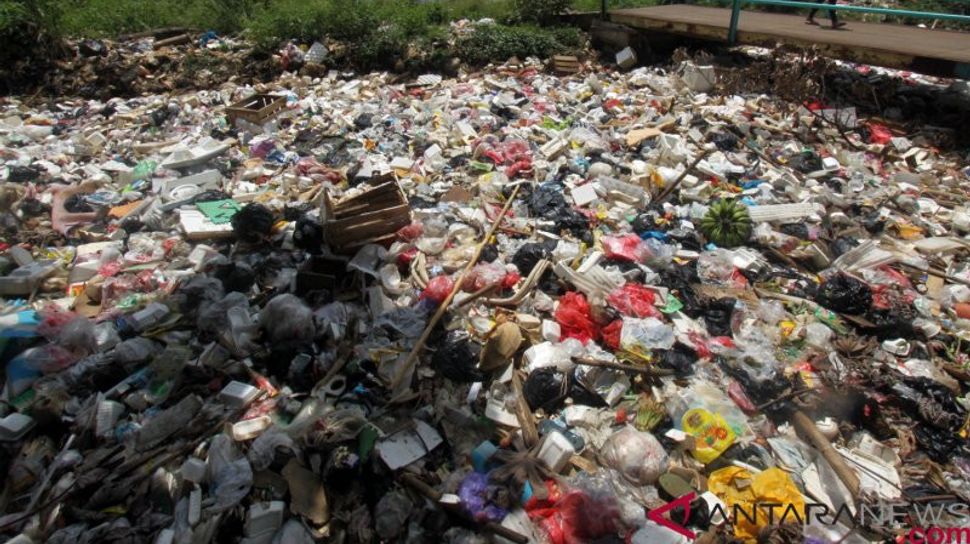
Plastic has entered our bodies and is also polluting our marine life. "Our rivers, lakes, wetlands, coasts, and oceans are filled with plastic waste. This is due to both our current consumption and the accumulation from decades ago," he said.
Hanif also addressed the issue of plastic waste imports, which he finds ironic. On one hand, Indonesia struggles to manage plastic waste, yet on the other hand, there are still imports of plastic waste. "We need to give serious attention to this matter," he stated.
Various measures are currently being taken to address the waste problem, including the construction of more than 250 integrated waste processing facilities.